Unlike the Old Testament or Hebrew Bible, of which Christians hold different views, the contents of the New Testament deal explicitly with 1st century Christianity, although both the Old and New Testament are regarded, together, as sacred scripture.

New Testament .pdf New Testament .pdf
Size : 2262.53 Kb
Type : pdf

King James Bible or KJV, is an English translation of the Christian Bible by the Church of England begun in 1604 and completed in 1611.

King James Bible .pdf King James Bible .pdf
Size : 662.269 Kb
Type : pdf


The Apostolic Fathers – Fathers of the first, second, third and fourth century

Here are 3.000 pages for your reading joy. This trilogy is the accounts of the early Apostolic Fathers written by Philip Schaff and edited by Alexander Roberts, D.D. & James Donaldson, LL.D. These version where published in 1885 and the ambitious aim has been to present English translations of the complete works and whereabouts of the early church Fathers down to the date of the first General Council held at Nice in A.D. 325. The trilogy gives an amazing insight into Christianity as it evolved in its earliest years. As written in the foreword of the first book:

“Those were times of heroism, not of words; an age, not of writers, but of soldiers; not of talkers, but of sufferers.


Fathers-of-the-Second-Century-Vol-II.pdf Fathers-of-the-Second-Century-Vol-II.pdf
Size : 5319.061 Kb
Type : pdf

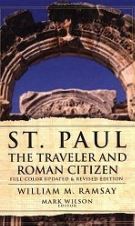
 Ramsay wrote this book to tell the story of Paul's life as it was documented in the Book of Acts. Before Ramsay begins his study of Paul's life, he discusses the date, composition, and authorship of Acts. "The first and the essential quality of the great historian is truth," says Ramsay. Of the four types of historical writing, namely, romance, legend, second rate history, and first rate history, Ramsay classifies the Book of Acts as first rate historical writing. The characterization of Paul found in Acts contains such individualized detail that the author could not have gathered this information by any means other than personal acquaintances and original sources.

St-Paul-the-Traveler-Roman-Citizen.pdf St-Paul-the-Traveler-Roman-Citizen.pdf
Size : 1214.033 Kb
Type : pdf
 

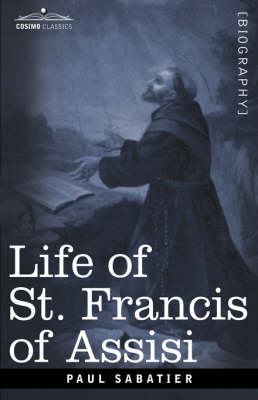
Francis of Assisi was the founder of the Franciscans order. He saw it as his task to preach. His sermon was simple, and joy and peace was important to him. And he was in all contexts a peacemaker. His brothers were sent out in all directions to preach. Francis himself was responsible for the mission in the Orient and came in 1219 in Damietta, where he was disgusted by Crusader atrocities. He sought out unusual Sultan – crusader agree opponent – to preach for him. Many fantastic myths, stories and movies have been made on the life of Francis of Assisi, Paul Sabatier’s biography is one of the more well known and historical correct books

The-Life-of-Saint-Francis-of-Assisi.pdf The-Life-of-Saint-Francis-of-Assisi.pdf
Size : 546.376 Kb
Type : pdf

The Confessions of St. Augustine is an ancient Christina spiritual writing by a bishop in north Africa. After the Bible, it is one of the most read Christian books. This kindle e-book contains and active table of contents, an introduction, and short chapter summaries. Where St. Augustine cites to Scripture, the verse citation is included. 

augustineconfess.pdf augustineconfess.pdf
Size : 782.693 Kb
Type : pdf

 Thomas Aquinas was born in 1225, he was an Italian priest of the Catholic Church in the Dominican Order, and an immensely influential philosopher and theologian in the tradition of scholasticism, known as Doctor Angelicus (the Angelic Doctor) and Doctor Communis or Doctor Universalis (the Common or Universal Doctor).

Here is his work “Nature and Grace: Selections from the Summa Theologica of Thomas Aquinas” in full text for your download pleasure (1,5 MB, 335 pages):

Thomas-Aquinas-Nature-and-Grace.pdf Thomas-Aquinas-Nature-and-Grace.pdf
Size : 1556.346 Kb
Type : pdf

Of God and His Creatures is the English translations of Summa contra Gentiles volumes I-IV written by St. Thomas Aquinas between 1258 and 1264. From the work:

“THE Divine Wisdom, that knows all things most fully, has deigned to reveal these her secrets to men, and in proof of them has displayed works beyond the competence of all natural powers, in the wonderful cure of diseases, in the raising of the dead, and what is more wonderful still, in such inspiration of human minds as that simple and ignorant persons, filled with the gift of the Holy Ghost, have gained in an instant the height of wisdom and eloquence.”


Meister Eckhart, who has been called the “Father of German thought”, was a Dominican monk, and one of the most profound thinkers of the Middle Ages. He was born about 1260 A.D. in Thuringia, and purportedly died at Cologne 1327 A.D. although his burial site has never been discovered. In 1295 he was Prior of the Dominicans at Erfurt and Vicar-General of Thuringia. In 1300 he was sent to the University of Paris, where he studied Aristotle and the Platonists, and took the degree of Master of Arts.

eckhart.pdf eckhart.pdf
Size : 717.966 Kb
Type : pdf

The Dialog of Catherine of Siena is a practical and compelling work of Christian mysticism. St. Catherine of Siena, a Dominican Tertiary, wrote it "during a state of ecstasy while in dialogue with God the Father." The book contains a dialog between the "Eternal Father" (God the Father) and "a human soul" (St. Catherine). In it, the Eternal Father describes, through many different analogies, allegories, and metaphors, the spiritual life of humankind

catherine-dialog.pdf catherine-dialog.pdf
Size : 311.919 Kb
Type : pdf

Some things never change, including the human need to connect with our creator. Prayer and meditation on the divine are techniques that have been used for millennia to grow in the knowledge of God. Cloud of Unknowing documents techniques used by the medieval monastic community to build and maintain that contemplative knowledge of God. Scholars date the anonymous authorship of Cloud of Unknowing to 1375, during the height of European monasticism. Written as a primer for the young monastic, the work is instructional, but does not have an austere didactic tone. Rather, the work embraces the reader with a maternal call to grow closer to God through meditation and prayer. 

cloudunknowing.pdf cloudunknowing.pdf
Size : 640.535 Kb
Type : pdf

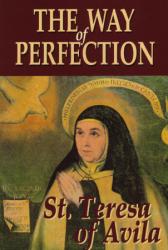
Although St. Teresa of Avila lived and wrote almost four centuries ago, her inspiring classic on the practice of prayer is fresh. The Way of Perfection is a practical guide to prayer setting forth the Saint’s counsels and directives for the attainment of spiritual perfection. Through the entire work there runs the author’s desire to teach a deep and lasting love of prayer beginning with a treatment of the three essentials of the prayer- filled life —fraternal love, detachment from created things, and true humility. Download it here:

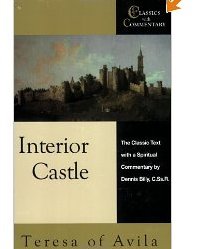
INTERIOR CASTLE is one of the most celebrated books on mystical theology in existence. It is the most sublime and mature of Teresa of Avila's works, and expresses the full flowering of her deep experience in guiding souls toward spiritual perfection. In addition to its profound mystical content, it is also a treasury of unforgettable maxims on such ascetic subjects as self-knowledge, humility, detachment, and suffering. 

st_teresa3.pdf st_teresa3.pdf
Size : 915.372 Kb
Type : pdf
THE ASCENT OF MOUNT CARMEL

This treatise explains how to reach divine union 
quickly. It presents instruction and doctrine
valuable for beginners and proficients alike
that they may learn how to unburden themselves of all earthly things, avoid spiritual obstacles, and live in that s complete nakedness and freedom of spirit necessary for divine union. It was composed by Padre Fray John of the Cross, Discalced Carmelite.


 Juan de Ypes y Álvarez, who took as his reformed religious name Juan de la Cruz, or John of the Cross, wrote his Dark Night of the Soul near the end of his life as a fourth part of a previous book, La subida del Monte Carmelo (1578- 1579; The Ascent of Mount Carmel, 1864, 1922). Much of what is obscure in Dark Night of the Soul is clarified by reading The Ascent of Mount Carmel, though the metaphysical nature of the subject matter makes understanding inevitably difficult

dark_night0.9.pdf dark_night0.9.pdf
Size : 255.583 Kb
Type : pdf

In this short commentary on the two principle works of St. John of the Cross – the Ascent of Mount Carmel and the Dark Night of the Soul – we will, as I stated earlier, be primarily concerned with examining the possibilities of developing a coherent mystical epistemology, that is to say, a theory of knowledge relative to the mystical experience in which the rational elements of this unique experience will become explicit to us, and so enable us to usher at least some very crucial aspects of this phenomenon into the arena of rational discourse. 

The Metaphysics of Mysticism
A Commentary on the Mystical Philosophy

of St. John of the Cross
By Geoffrey K. Mondello

 To know God is to love God. The more we know Him the more we are able to love Him. Brother Lawrence, a monk in the 1600s, spent many years practicing the presence of God in his life. His key to this practice was that he strove to be consciously aware of God's presence at all times. This is truly a classic in the sense that Brother Lawrence's message has survived several centuries and still inspires many individuals to purposefully enjoy God's presence in their lives. This book is one to read several times as there are many nuggets of wisdom for those who want to grow in their relationship with God.


Practice-of-the-Presence-of-God.pdf Practice-of-the-Presence-of-God.pdf
Size : 53.396 Kb
Type : pdf

 The Divine Comedy by Dante Alighieri is an epic poem written between 1308 and his death in 1321. The Divine Comedy is not a comedy at all, the title Commedia refers to fact that the journey starts from hell and ends with Dante’s visit to heaven and meeting with God and understanding of the mystery of reincarnation. The work is written in the first person, and tells of Dante’s journey through the three realms of the dead, lasting from the night before Good Friday to the Wednesday after Easter in the spring of 1300. The Roman poet Virgil guides him through Hell and Purgatory; Beatrice, Dante’s ideal woman, guides him through Heaven.

Dante-Alighieri-The-Divine-Comedy.pdf Dante-Alighieri-The-Divine-Comedy.pdf
Size : 748.973 Kb
Type : pdf

This free website was made using Yola.

No HTML skills required. Build your website in minutes.

Go to www.yola.com and sign up today!

Make a free website with Yola