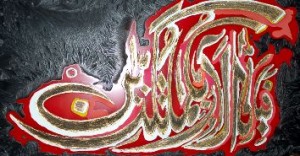
The Quran (English pronunciation: /kɒˈrɑːn/ kor-ahn; Arabic: القرآنal-qurʾān, IPA: [qurˈʔaːn],[variations] literally meaning "the recitation"), also transliterated Qur'an, Koran, Alcoran, Qur’ān, Coran, Kuran, and al-Qur’ān, is the central religious text of Islam, which Muslims consider the verbatim word of God[1] (Arabic: الله‎, Allah). It is regarded widely as the finest piece of literature in the Arabic language.

Quran.PDF Quran.PDF
Size : 2461.58 Kb
Type : PDF

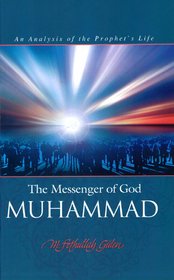
The Life of the Prophet Muhammad has been a topic for many books and studies. The Messenger of God – Muhammed – An Analysis of the Prophets Life differs from other books on the Prophet in the sense that Gülen assumes a psychological and sociological analysis on the various aspects of the Prophet’s life portraying him as a compassionate father, a profound spiritual leader, a wise statemen, a courageous commander, a loving husband, a most reliable and trustworthy person.


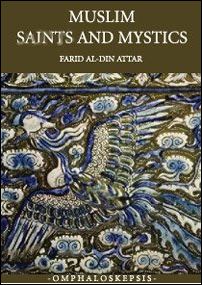
Farid Al-Din Attar was one of old Persias greatest poets. He appears to have died between a.d. 1220 and 1230. Of the very numerous epics and idylls ascribed to Attar perhaps nine may be recognized as authentic. Of these the most famous is the Manteq Altair, a subtle and charming allegory of the soul’s progress towards God. This books is a collection of biographies of Sufis, Mystics and Muslims saints. Download it here (428 pages):

Muslim-Saints-and-Mystics.pdf Muslim-Saints-and-Mystics.pdf
Size : 1369.603 Kb
Type : pdf

THE MYSTICS OF ISLAM

THE title of this book sufficiently explains why it is included in a Series 'exemplifying the adventures and labours of individual seekers or groups of seekers in quest of reality.' Sufism, the religious philosophy of Islam, is described in the oldest extant definition as 'the apprehension of divine realities,' and Mohammedan mystics are fond of calling themselves Ahl al-Haqq, 'the followers of the Real.' {Al-Haqq is the term generally used by Sufis when they refer to God.}


Mystics-of-Islam.pdf Mystics-of-Islam.pdf
Size : 566.506 Kb
Type : pdf

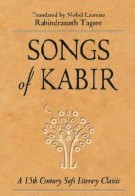
 The poet Kabîr, is one of the most interesting personalities in the history of Indian mysticism. Born in or near Benares, of Mohammedan parents, and probably about the year 1440, be became in early life a disciple of the celebrated Hindu ascetic Râmânanda. Râmânanda had brought to Northern India the religious revival which Râmânuja, the great twelfth-century reformer of Brâhmanism, had initiated in the South. Here is the book Songs of Kabir

Songs-of-Kabir-by-Tagore(1).pdf Songs-of-Kabir-by-Tagore(1).pdf
Size : 230.173 Kb
Type : pdf

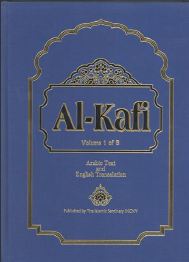
 Al-Kafi is a fundamental and classic Shia-text written by the fourteen infallible family members of Prophet Muhammad, (Divine Supreme Covenant Body) to their followers. This volume of al-Kafi, which is about seven hundred pages, is considered to be a text of an interview with a person who possesses Divine authority. It is among Shia scholars an established fact that the words of Ahl al-Bayt, Allah’ Supreme Covenant Body, are in complete harmony. An interview with any one of them would serve as an interview with all and every one of them. To have an interview of that many words as those in this volume provides one a very good chance to know the personality of the person interviewed.

Al-Kafi.pdf Al-Kafi.pdf
Size : 1867.808 Kb
Type : pdf

 ‘Tabjuman Al-Ashwaq – A Collection of Mystical Odes’ by MUHYI’DDIN IBN AL-’ARABI is a collection of three individual sufi manuscripts that have been edited together here. This scanned edition was published by The Royal Asiatic Society in London 1911.

Ibn-Al-Arabi-Tarjuman-Al-Ashwaq.pdf Ibn-Al-Arabi-Tarjuman-Al-Ashwaq.pdf
Size : 6657.034 Kb
Type : pdf


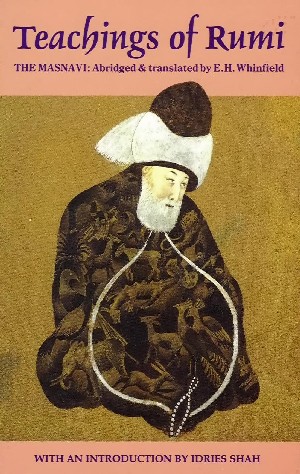
The title of Rumis masterwork Masnavi-I Ma’navi means “Rhyming Couplets of Profound Spiritual Meaning.” Rumi himself referred to the Masnavi as “the roots of the roots of the roots of the Islamic Religion.”  The Masnavi is a poetic collection of rambling anecdotes and stories derived from the Quranhadith sources, and everyday tales. Stories are told to illustrate a point and each moral is discussed in detail. Download Rumis Masnavi-I Ma’navi unabridged ebook here: (483 pages)


:

Masnavi-I-Manavi-Teachings-of-Rumi.pdf Masnavi-I-Manavi-Teachings-of-Rumi.pdf
Size : 1098.063 Kb
Type : pdf

Jelal-ed-din Rumi was born at Balkh, Persia, in 1207, and died at Konya, Turkey, in 1273. He founded the order of Mevlevi or whirling dervishes, and his chief work is the Mathnawi, an epic poem which expresses their mystical path. It was translated into English by Reynold Nicholson (6 volumes, London, 1926). This booklet is a selection from ‘The Lives of the Gnostics’ by Aflaki, disciple of the poet’s grandson, written between 1318 and 1335. It was translated into French by C. Huart under the title ‘Les Saints des Derviches Tourneurs’ (Paris 1918-22). Download the free ebook here:

The-Whirling-Ecstacy.pdf The-Whirling-Ecstacy.pdf
Size : 979.43 Kb
Type : pdf


The word Sufi is derived from the word suf, meaning “wool”. When a little Persian sect at the end of the eighth century A.D. broke away from the orthodox Muslim religion, and struck out on an independent path, they ignored costly robes and worldly ostentation, and clad themselves in a white wool garment. Hence they were known as “wool wearers,” or Sufis.
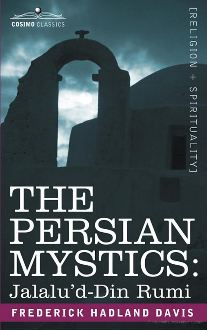
This books about Sufism form 1907 aims at presenting the teachings of Rumi for the western readers.

The-Persian-Mystics-Jalaluddin-Rumi(1).pdf The-Persian-Mystics-Jalaluddin-Rumi(1).pdf
Size : 2706.884 Kb
Type : pdf

 Author of The Tawasin, Mansur Al-Hallaj was a Persian mystic, revolutionary writer and teacher of Sufism most famous for his apparent, but disputed, self-proclaimed divinity, his poetry and for his execution for heresy at the orders of the Abbasid Caliph Al-Muqtadir after a long, drawn-out investigation. The Afghan sufi scholar Idries Shah suggested that Mansur al-Hallaj might have been the origin of the character Hiram Abiff in the Freemasonic Master Mason ritual. Download the ebook in full text here (388KB, 23 page

The-Tawasin-of-Mansur-Al-Hallaj.pdf The-Tawasin-of-Mansur-Al-Hallaj.pdf
Size : 387.924 Kb
Type : pdf


This article is an ethnographic study of an Islamic mystical (Sufi) order based in the tribal area of Pakistan. Fieldwork was conducted in 1996-1997 as a participant observer of the order and at other sites in and around Pakistan. By using broader methods and theory more appropriate to the analysis of mysticism, the article aims to challenge previous ethnographic studies of the Sufi orders that attributed their
existence largely to social, political, and economic factors. By more clearly defining both the nature of saintly charisma and the mystical ritual process, it argues that the raison d’être of the orders is the cultivation of deeper states of consciousness. It concludes by calling for a new theoretical framework, a “transcendental anthropology” more appropriate to elucidating mystical states and practices.

Ritual & Char.pdf Ritual & Char.pdf
Size : 280.96 Kb
Type : pdf

This free website was made using Yola.

No HTML skills required. Build your website in minutes.

Go to www.yola.com and sign up today!

Make a free website with Yola